

I have nothing against spreadsheets. I have built careers on them. But I have also watched good leaders spend the first week of every month rebuilding the same portfolio report from scratch, and that is a symptom worth taking seriously.
Spreadsheets are an analysis tool. When they become the system of record for a portfolio, five things start to break.
1. The numbers do not match, so the meeting is about the numbers
Finance has one budget total. The PMO has another. The product team has a third. All three are "right" for the version of the file they opened. The leadership review that should have been about decisions turns into reconciliation.
2. Status is opinion
In a spreadsheet, health is a cell someone colors in. There is no history, no rule for when green becomes amber, and no link to the dates that would justify the color. Over time people learn to read the colors as politics rather than facts.
3. Nothing connects, so nobody sees the chain
A delayed vendor contract blocks an API, which blocks a feature, which blocks a deal that sales has already forecast. Each fact sits in a different file owned by a different person. Nobody sees the chain until the deal slips.
4. Every team invents its own process
When the tool does not hold the process, each team writes its own. One team has seven stages, another has twelve. "Approved" means funded in one group and merely reviewed in another. Cross-team comparisons become meaningless.
5. The history disappears
Who moved this into Production? When? What did the business case say at the time? Spreadsheets overwrite. The audit trail lives in email if it lives anywhere.
The real cost is trust
The hours are real. Senior people spending days a month building reports is an expensive way to produce information that is out of date on arrival. But the bigger cost is trust. When executives do not trust the portfolio numbers, they fall back to gut feel, side conversations and whoever presents most confidently.
That is how organizations end up funding the loudest idea instead of the best one.
What fixes it
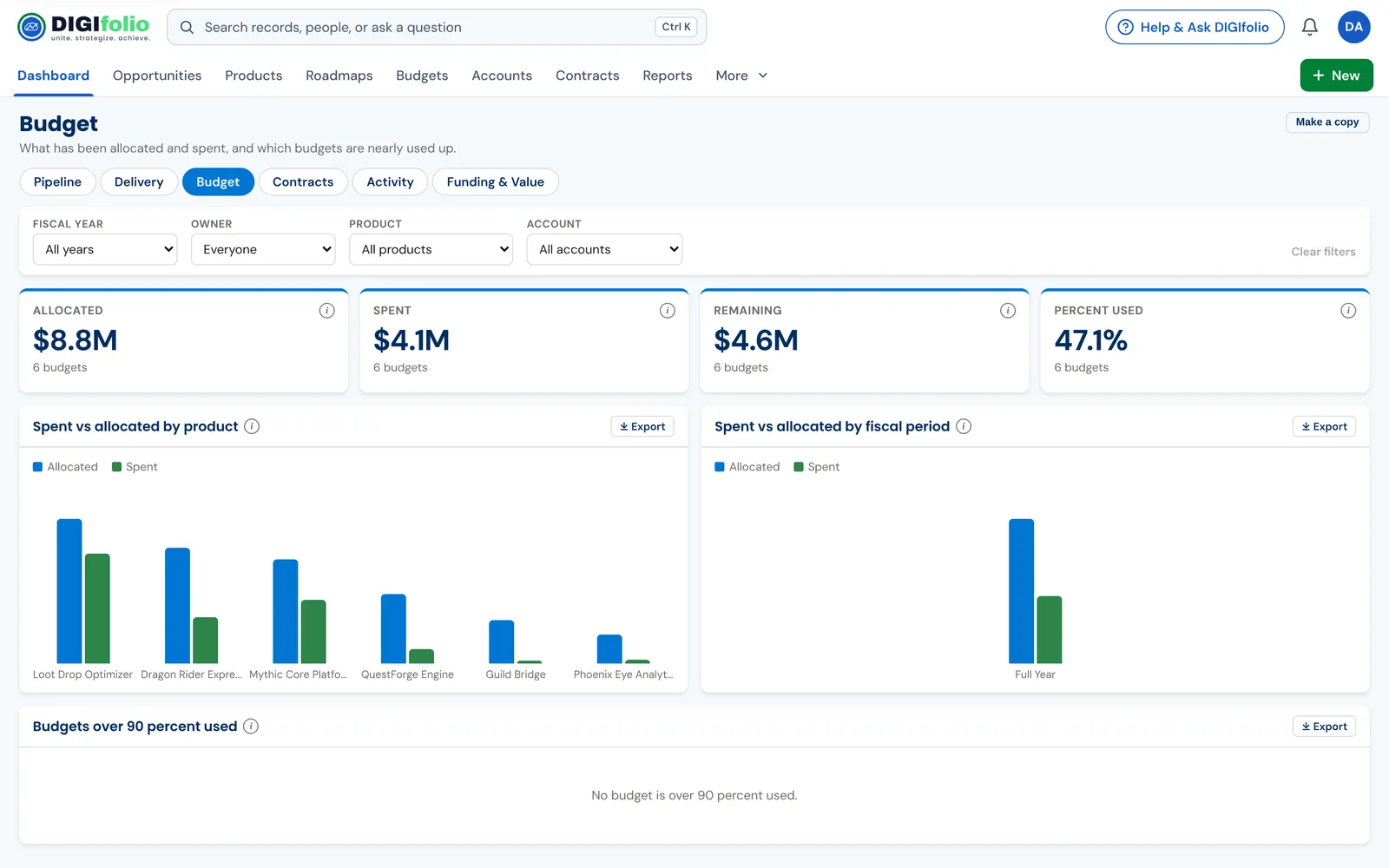
The fix is not a better template. It is moving the system of record out of files and into connected records with shared definitions, and letting reports read from those records directly. Spreadsheets go back to what they are good at: exporting a slice of data to explore.
Next in the series: who should own which part of the data once it is centralized, because centralizing without clear ownership just moves the mess.